Neuromarketing sounds big,
bad and evil, but it’s really
quite simple. Perhaps it’s best
described as marketing to our
subconscious.
Bud Light uses humor. That’s
neuromarketing. Chevy trucks use
visualization — “Like a rock.” That’s
neuromarketing.
Imagine you’re hiking and you see
something brown, thin, and long in your
path. Instinctively you jump back before your
conscious brain has had time to process
whether the thing is a dangerous snake or
a harmless stick. Your subconscious brain,
the same brain that jerks your finger back
off a hot skillet before you can process it as
a danger, “overrode” your other sensations.
Marketing to that ultra-powerful
subconscious brain is neuromarketing.
How does such marketing relate to politics?
Is it evil? Does it “cheat” or somehow trick
the voter? No way. Another term for it might
simply be “good advertising.”
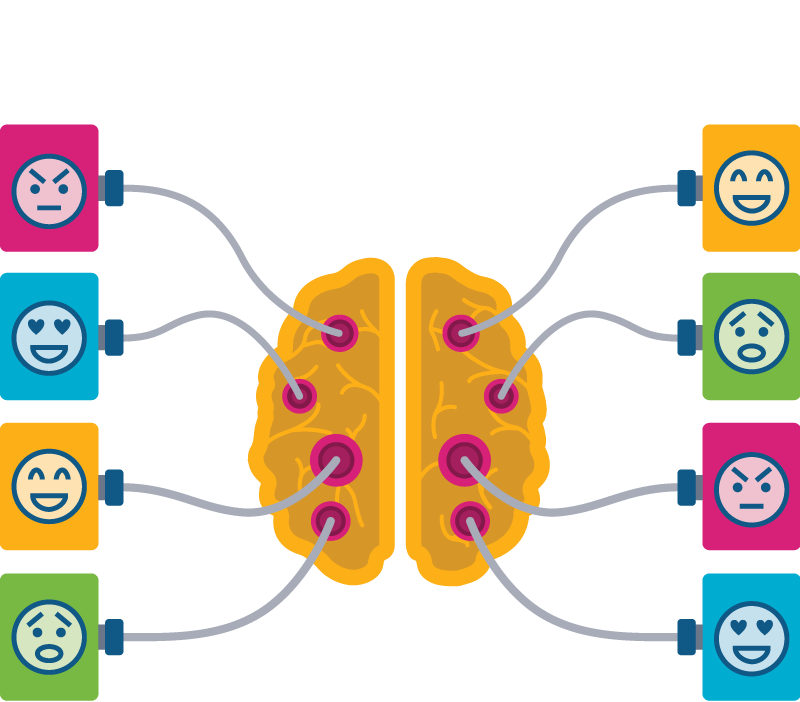
The idea of neuromarketing is that the use
of a base emotional appeal — love, fear,
humor, anger — will be more effective than
a factual appeal. It suggests that visuals are
more readily accepted by the subconscious
than words.
Is that new? Well, didn’t we hear as children
that one picture is worth a thousand words?
That’s neuromarketing.
While it might surprise some, we’re really
not talking about a new concept in politics.
Neuromarketing is a tactic that has been
in use in some form for many cycles now,
and my firm has applied the basic principles
behind it on ad campaigns dating back more
than a decade.
Let’s start with an example from 2004: We
produced an ad for the reelection campaign
of George W. Bush. There were zero spoken
words in it. It showed a powerful static shot
of a rock being pounded by ocean waves.
The rock never moved, never wavered. After
thirty seconds, a simple graphic with three
words appeared, “Peace through strength.”
The Bush campaign debated the approach,
but never chose to use it. That one ad,
though, was why the McCain presidential
campaign said that they hired us to head
their ad team four years later.
Gov. Arnold Schwarzenegger was up for
reelection in California in 2006. It’s easy to
forget that, when that campaign began, he
was behind by double digits to the generic
Democrat. The theme of the campaign was
whether voters wanted to go back to the
days of the previously recalled governor,
Gray Davis, or to continue Schwarzenegger’s
reforms.